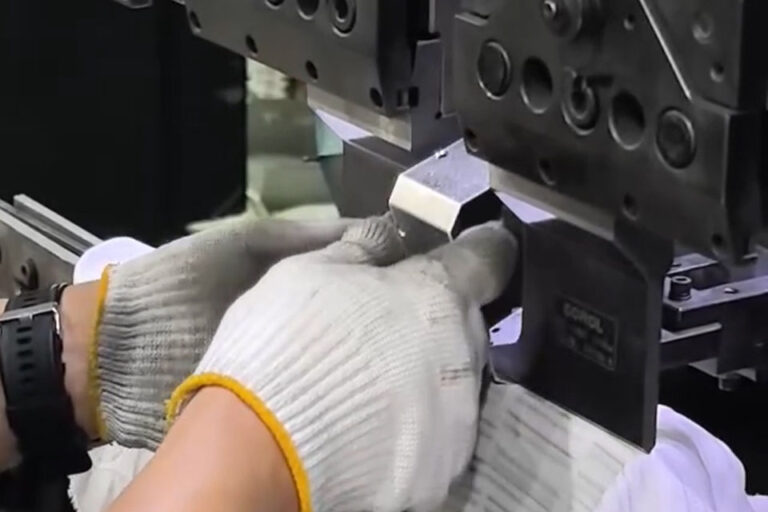




How To Control Tolerance In Sheet Metal Bending
Scrap has finger prints.
When a print calls out ± 0.10 mm on every flange, blends 5052-H32 with 304 stainless as though they behave the exact same, disregards grain instructions, and after that criticizes the press brake driver, I understand the failure took place prior to the maker was ever before powered up. That really created the tolerance trouble?
Below is my blunt sight: most bad sheet steel bending tolerances are engineered right into the part by people who assume resistance is a note, not a process. Journalism brake only exposes the lie.
To control resistance in sheet metal flexing, you require to control 4 things at the same time: angle, straight dimensions, bend distance, and material behavior. Miss one, and the others start lying to you. A 90 ° bend that opens to 91.2 ° after springback changes the leg size. An incorrect inside span damages the level pattern. A polished strike with used shoulders offers you repeatability cinema, not repeatability.
This is why major buyers do not deal with sheet steel flexing solutions as a product unless the part is flexible. Affordable flexing is fine for brackets. It is reckless for units, mating covers, datum-dependent framework, battery trays, electric cupboards, aerospace-adjacent housings, and any type of component that should set up without a professional “convincing” it.
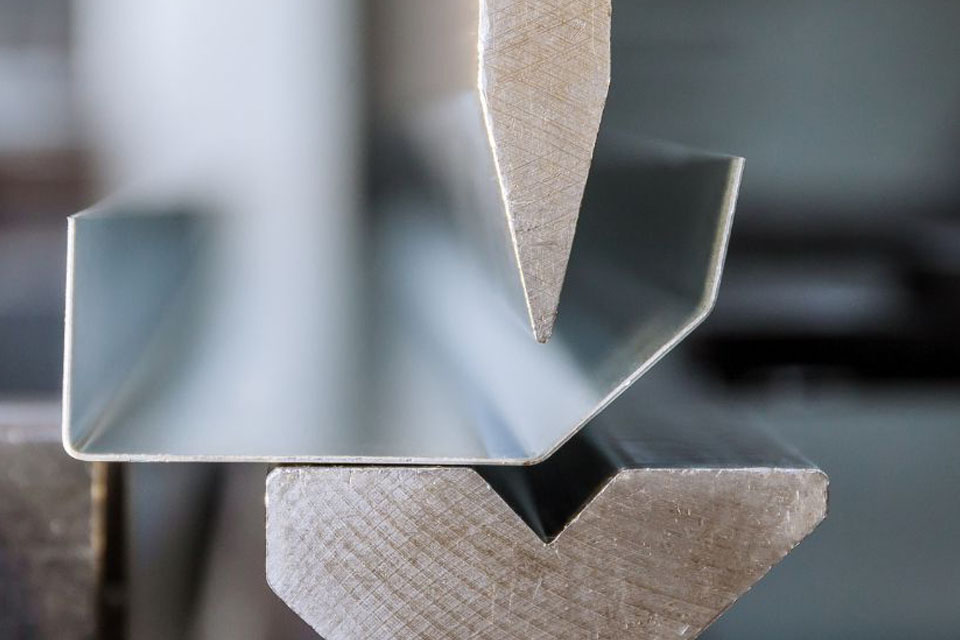
The 4 Variables That In Fact Move Your Bend
1. Springback Is Not a Flaw. It Is Physics.
Sheet metal flexing springback happens because the beyond the bend stretches, the inside compresses, and the product tries to elastically recover after the punch lots is launched. Aluminum 5052-H32, mild steel CRS, galvanized steel, 304 stainless, and 6061-T6 all bounce back in different ways. Also 2 coils from the same nominal quality can act differently if return toughness, density, grain alignment, or finish changes.
So when somebody asks, “How do I hold tighter press brake tolerances?” my initial solution is usually: quit acting the material certification is decorative.
The bend angle is just one result. The actual target is the developed component geometry. That suggests your maker requires to compensate for springback with test flexes, adjusted tooling, controlled press brake crowning, and a recognized K-factor or bend reduction table. If they are guessing the flat pattern from tribal understanding, you are denying accuracy. You are purchasing hope.
2. Bend Allocation and Bend Reduction Are Where Linear Error Begins
The terms sound scholastic. They are not.
Bend allocation sheet metal calculations estimate the arc length of material eaten via the bend. Bend deduction sheet steel calculations inform you how much to deduct from total outdoors dimensions to obtain the right level blank. Get either incorrect and the component can form at the best angle while still gauging incorrect throughout flanges.
That is the trap.
A store can strike 90.0 ° and still ship components that fail examination since the established size was incorrect. The mathematics depends upon thickness, inside bend radius, bend angle, K-factor, tooling geometry, and forming approach. Air flexing, bottoming, and creating do not generate identical results.
For manufacturing job, I desire a confirmed bend table linked to real tooling and product. Not a spreadsheet copied from a forum. Not a CAD default. Not “we typically make use of 0.44 K-factor.” Normally is not a quality strategy.
Resistance Control Begins on the Illustration, Not at Inspection
One of the most useful tolerance technique is not brave accuracy. It is intelligent looseness.
Provide limited tolerances only to features that matter: mating holes, gasket surfaces, datum sides, PEM bolt places, hinge alignments, chassis user interfaces, electrical clearance points, and assembly-critical tabs. Whatever else ought to breathe.
If the component is entering into a bonded or secured sheet steel assembly, tolerance stack-up matters more than individual bend vanity. A ± 0.2 mm flange can become a 1.0 mm assembly fight after 5 bends, two equipment inserts, and one powder-coat layer.
Hard truth: covering tolerancing is amateur hour. Expert drawings separate functional tolerance from cosmetic resistance.
Utilize this pecking order:
| Control Location | Bad Drawing Behavior | Better Resistance Strategy | Why It Works |
|---|---|---|---|
| Bend angle | “All bends ± 0.5 °” | Tighten only datum-forming bends; loosen up cosmetic bends | Lowers examination noise and rework |
| Bend radius resistance | Unspecified inside span | Use one constant inside radius where possible | Supports bend allocation and bend deduction |
| Hole-to-bend range | Holes also near to bend line | Maintain openings outside distortion zones or laser after developing | Protects against oblong holes and positional drift |
| Product callout | “Aluminum, 2 mm” | Define alloy, mood, thickness resistance, grain direction if required | Reduces springback variation |
| Flat pattern | CAD default K-factor | Shop-verified K-factor by material/tooling | Makes initial write-ups significant |
| Examination | Final QC only | First post plus in-process angle checks | Catches drift before full-batch scrap |
The Real-World Evidence: Process Failing Is Expensive
The 2024 production economic situation is not forgiving careless procedure control. NIST’s October 2024 Yearly Record on the U.S. Manufacturing Economy reported that united state manufacturing made up $2.6 trillion in worth added, equal to 15.1% of global manufacturing value included, which labor productivity climbed just 0.4% from Q2 2023 to Q2 2024.: stores are anticipated to create more precision with very little efficiency pillow.
The very same NIST record determines key steels and fabricated metals amongst significant supply-chain price things for discrete technology items, which is exactly where sheet metal suppliers live. That issues due to the fact that resistance control is not just a metrology issue; it is a purchasing problem, a product availability concern, and a provider technique issue.
And if you assume documents is governmental expenses, examine the NTSB’s Alaska Airlines Flight 1282 examination. It was not a sheet steel flexing case, yet it is a ruthless process-control lesson: the NTSB stated four screws protecting a Boeing 737-9 mid-exit door plug were missing, and it connected the failure to poor training, assistance, oversight, and documentation self-control. Production high quality gets away rarely reveal themselves as calamities on day one. They begin as “small” process variances.
The Demographics Bureau’s manufacturing data facilities additionally shifted in 2024, with the Yearly Survey of Manufactures transitioning into the Annual Integrated Economic Survey, which started data collection in March 2024. That appears administrative, but it shows a wider point: producing performance is being measured extra strongly, and vendors that can not confirm procedure control will certainly look weak in significant purchase evaluations.
Just how I Would Certainly Control Sheet Steel Bend Resistance on a Genuine Component
Step 1: Design With the Loosest Practical Resistance
Begin by asking which dimensions really impact fit, sealing, fastening, electrical clearance, or setting up sequence. Then loosen whatever else.
I do not count on illustrations that demand medical tolerances without explaining the datum plan. If a flange length is attractive, do not penalize the store with ± 0.1 mm. If a hole controls setting up positioning, protect it with a genuine positional tolerance and a correct datum recommendation frame.
An expert sheet steel fabrication distributor should challenge poor resistances before estimating. Silence is not always skills. In some cases it is fear of shedding the RFQ.
Step 2: Keep Bend Radii Regular
Bend radius tolerance is where numerous styles quietly fall short.
Make use of one inside bend distance wherever the style permits. A constant span means less tooling modifications, much better bend tables, even more foreseeable springback, and much less variation in bend allowance. If you blend R0.5, R1.0, R1.5, and R3.0 on a tiny brace for no functional factor, you are spending for turmoil.
For several air-bent components, the within span is driven less by your CAD model and more by the V-die opening and material actions. That is why “R = material density” is a guideline, not a magic law.
Step 3: Control Tooling Like It Becomes Part Of the Product
Press brake resistances depend upon tooling problem.
A worn strike nose transforms the created radius. A damaged die shoulder marks the product and changes contact behavior. A dirty backgauge presents repeatability mistakes. An inadequately adjusted ram turns a batch right into a slow-motion debate between operator, assessor, and customer.
For limited work, I wish to know:
- Maker kind: hydraulic, electrical, hybrid, CNC press brake
- Backgauge repeatability
- Crowning system
- Punch radius and V-die opening
- Tooling brand name and condition
- Bend sequence
- First-article assessment method
- Whether angle modification is hands-on or sensor-assisted
This is not excessive. This is how you stop spending for preventable drift.
Tip 4: Validate the First Write-up Before Manufacturing
The very first write-up is not a ceremony. It is the trial where your presumptions either endure or pass away.
Measure the formed angle, flange length, opening place after flexing, flat pattern habits, and setting up fit. Then update the bend deduction table or level pattern if needed. For repeat orders, secure the modification: product quality, density, grain instructions, tooling, press brake program, and examination plan.
When sourcing personalized sheet metal components, I prefer to spend for one self-displined initial article than accept a reduced quote that hides 3 rounds of rework.
Best Practices for Sheet Metal Bending Tolerances
The best methods for sheet metal flexing tolerances are not glamorous. They are repeatable.
Use regulated material lots when feasible. Confirm thickness with calipers or micrometers, not simply the order. Prevent minimum bend distances that penalize ductility. Maintain openings far from bend lines unless distortion serves. Usage relief cuts where flanges collide or worry concentrates. Define cosmetic surface areas. Define grain direction when fracturing, appearance, or springback uniformity matters.
And stop asking the press brake to take care of poor function placement.
If a laser-cut hole sits as well close to a bend, it may misshape. If a notch intersects the bend area, the bend might twist. If a high slim flange is curved after nearby attributes are created, tooling gain access to might require a poor bend sequence. Tolerance control is geometry control.
Frequently asked questions
What is a reasonable sheet metal bending resistance?
A reasonable sheet metal flexing resistance is the permitted variation in bend angle, flange length, distance, and function position after creating, based on product, thickness, tooling, bend technique, and assessment capability instead of a common illustration note duplicated throughout every function. For regular press brake work, tolerances must be discussed by function, not ego.
For many commercial parts, angular tolerances around ± 0.5 ° to ± 1.0 ° and linear resistances around ± 0.2 mm to ± 0.5 mm may be more practical than ultra-tight covering tolerances, yet the proper number relies on product, machine, tooling, and part geometry.
Exactly how do you lower sheet steel bending springback?
Sheet steel bending springback is decreased by selecting foreseeable product, making use of validated tooling, applying examined bend reductions, compensating bend angles in journalism brake program, and confirming results via first-article inspection prior to full manufacturing begins. The goal is not to remove springback entirely; the objective is to design and make up for it regularly.
Stainless steel and high-strength light weight aluminum normally require more settlement than moderate steel. Air bending usually reveals even more springback than bottoming or coining, though it is a lot more versatile and usual in contemporary fabrication.
What is the difference in between bend allowance and bend deduction?
Bend allocation is the approximated arc size of product utilized via the bend, while bend reduction is the amount subtracted from total outdoors measurements to compute the proper level pattern before forming. Both are ways of translating a 3D created component right into a 2D blank that will certainly bend right into the target geometry.
In sensible store terms, bend allowance helps determine developed length from inside geometry, while bend deduction is usually used when working from outside flange measurements. Both rely on inside span, density, bend angle, and K-factor.
Do press brake resistances depend more on the machine or the driver?
Press brake tolerances depend upon the mixed system of device accuracy, tooling problem, product variation, bend series, driver ability, CNC shows, backgauge repeatability, and examination self-control. A proficient driver can compensate for variation, yet also the best operator can not get over unstable drawings, used tooling, or unchecked product behavior permanently.
I rely on a controlled procedure greater than a heroic operator. Heroics do not scale across shifts, devices, vendors, or repeat orders.
Should every bend have the tightest feasible tolerance?
Every bend ought to not have the tightest possible resistance due to the fact that unneeded accuracy boosts cost, assessment worry, rework risk, and vendor rubbing without boosting product function. Excellent tolerance design appoints limited limits only to features that regulate healthy, assembly, securing, security, placement, or downstream manufacturing procedures.
This is where experienced design customers separate themselves from spread sheet buyers. An inexpensive quote with bad tolerances typically comes to be one of the most expensive order in the structure.
Your Following Actions: Make the Illustration Boring Prior To the Part Gets Pricey
Send your fabricator the complete 3D model, 2D drawing, product grade, density, surface need, annual quantity, setting up context, and the dimensions that absolutely issue. Request for responses on bend span, bend series, bend reduction, resistance danger, and examination method before you accept production.
If the vendor can not discuss just how they control sheet steel bending tolerances, springback, tooling wear, and first-article adjustment, do not treat that as a small weak point. Treat it as the quote informing you the truth.