



ISO 9001:2015 Low Voluem Custom Sheet Metal Parts
Ordering low volume custom sheet metal parts should not feel like gambling.
You send a CAD file. You wait. You get a quote that looks fine on paper. Then the real questions start showing up: Can this shop hold tolerance after the first 20 parts? Will the finish match from batch to batch? Can they handle a revision without blowing up the schedule? And when the part moves from prototype to short run production, will they still care?
That is where ISO 9001:2015 matters.
Not as a logo.
As a working system.
Why Low Volume Sheet Metal Production Is Having a Moment
We are seeing more teams ask for smaller, cleaner production runs.
Not because they lack ambition. Because they are trying to stay sane.
Big blanket orders tie up cash. Long offshore lead times create risk. Engineering teams change designs faster than old-school production schedules can handle. And no one wants 2,000 obsolete enclosures sitting on a shelf because Rev B fixed a cooling issue.
The market is not small, either. Global Market Insights estimates the sheet metal fabrication services market at $87.3 billion in 2025, with growth projected through 2035, according to its sheet metal fabrication services market report.
So, yes, low volume work is no longer a side lane.
For a lot of buyers, it is the smarter lane.
What Counts as Low Volume Custom Sheet Metal Parts?
There is no universal number.
One shop might call 25 pieces low volume. Another might say 500. Another may run several thousand parts as a scheduled production program.
In practical buying terms, low volume custom sheet metal parts usually means:
- Too many parts for a one-off prototype mindset
- Too few parts for hard tooling or fully dedicated production
- Enough quantity that repeatability matters
- Enough uncertainty that flexibility still matters
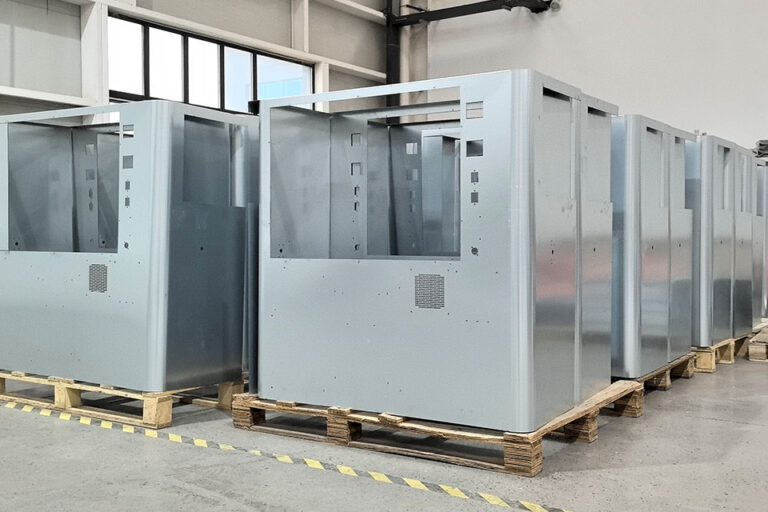
Think brackets, panels, covers, chassis, trays, busbar covers, equipment guards, control boxes, battery components, medical device housings, robotics frames, and telecom hardware.
The sweet spot is usually where engineering is still learning but the business needs real parts in real hands.
Prototype vs. Low Volume vs. Full Production
Here is the clean way to think about it.
| Production Type | Typical Use Case | Main Buyer Concern | Best Fit |
|---|---|---|---|
| Prototype sheet metal | First articles, fit checks, design validation | Speed and feedback | Engineering teams proving geometry |
| Low volume production | Pilot runs, beta units, bridge builds, scheduled batches | Repeatability without overcommitting | Teams moving from design to market |
| Full production | Stable, mature designs at scale | Unit cost and throughput | Products with proven demand |
The trap?
People treat low volume like “just more prototypes.”
That is how you get inconsistent bends, mismatched finishes, late hardware installs, and parts that pass once but fail in the next batch.
Low volume deserves production thinking — just without the heavy tooling burden.
Where ISO 9001:2015 Fits In
ISO 9001:2015 is not a magic stamp that guarantees perfect parts.
Let’s be honest about that.
But it does tell you something useful: the supplier has a quality management system built around documented processes, customer requirements, corrective action, continuous improvement, and controlled work. ISO describes ISO 9001 as a globally recognized quality management standard used to help organizations meet customer expectations and improve performance, and notes that it has more than one million certificates across 189 countries in its ISO 9001 overview.
For sheet metal buyers, that should translate into practical questions:
- Is the revision level controlled?
- Are inspection requirements documented?
- Is material traceability available when needed?
- Are nonconforming parts handled through a defined process?
- Are operators working from current prints?
- Are corrective actions tracked?
That is what you are really buying.
Not paperwork. Discipline.
When Low Volume Sheet Metal Makes the Most Sense
Low volume is not the answer for every project.
But when it fits, it fits beautifully.
You Are Testing Demand
Maybe the product is new. Maybe the customer forecast is optimistic. Maybe sales says, “We need 300,” and engineering quietly thinks 75 would be safer.
A low volume build lets you ship without betting the year’s budget on inventory.
You Expect Design Changes
This is common in robotics, electronics, medical equipment, EV hardware, lab instruments, and industrial controls.
The enclosure works. Mostly.
Then field testing shows one connector needs to move. Or airflow needs more venting. Or a mounting tab should be thicker. With low volume fabrication, revision changes are less painful than they are in hard-tooled production.
You Need Bridge Production
Bridge production fills the gap between prototype approval and high-volume manufacturing.
You may be waiting on tooling. Waiting on regulatory review. Waiting on customer approval. Waiting on demand to firm up.
But you still need parts.
You Want to Reduce Inventory Risk
McKinsey’s 2025 supply chain risk research found that tariffs affected a large share of surveyed supply chains and pushed many companies toward inventory, dual sourcing, nearshoring, and supplier changes. Its Supply Chain Risk Pulse 2025 is a useful reminder that “buy everything at once” is not always the safer move.
Sometimes the safer move is a controlled, scheduled batch.
Common Low Volume Sheet Metal Parts
Low volume sheet metal is used in more places than most people think.
A few common examples:
- Electronic enclosures
- Rackmount chassis
- Mounting brackets
- Industrial panels
- Control cabinets
- Access covers
- Battery trays
- Machine guards
- Sensor housings
- Medical equipment panels
- Robotics frames
- HVAC components
- Aerospace interior brackets
- Telecom and data hardware
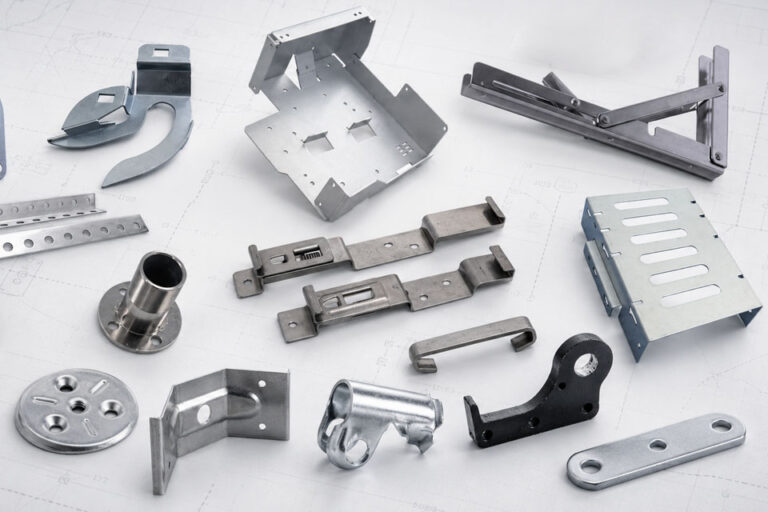
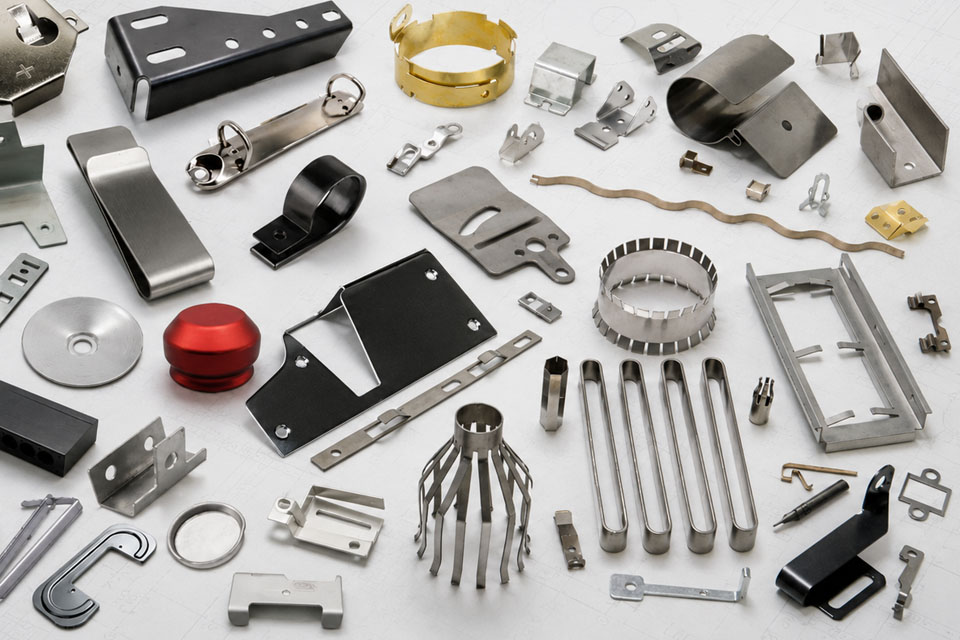
Some are simple flat parts with bends.
Others require laser cutting, forming, PEM hardware, welding, grinding, powder coating, silk screening, assembly, and inspection.
The difference between “simple” and “messy” is usually in the details.
Materials for Low Volume Custom Sheet Metal Parts
Material choice affects strength, weight, finish, corrosion resistance, bend behavior, and price.
Here is a practical buyer’s table.
| Material | Why Buyers Use It | Watch-Outs |
|---|---|---|
| Cold rolled steel | Good strength, clean finish, common for enclosures and brackets | Needs finishing for corrosion resistance |
| Galvanized steel | Better corrosion resistance than plain steel | Coating can affect welding and cosmetic finish |
| Stainless steel | Corrosion resistance, durability, clean appearance | Higher cost and tougher forming |
| Aluminum | Lightweight, good corrosion resistance, easy to machine and form | Softer than steel; thread strength needs planning |
| Copper | Conductivity, grounding, thermal applications | Expensive and finish-sensitive |
| Brass | Appearance, conductivity, specialty hardware | Can be costlier and less common in structural parts |
Here is the blunt advice: do not pick material only from habit.
Pick it based on the environment, load, finish, conductivity, weight target, and bend requirements.
Tolerances: Where Projects Get Expensive Fast
Every shop loves a clean print.
Every shop gets nervous when every dimension is tight “just because.”
Tight tolerances are sometimes needed. No argument there. But they should be intentional.
Sheet metal moves. It bends, springs back, stretches, and reacts differently across materials and thicknesses. Add hardware insertion, welding, grinding, and finishing, and tolerance stack-up becomes real.
For low volume work, a good supplier should help you separate:
- Features that must be tight
- Features that can use standard shop tolerance
- Features that should be controlled with tooling
- Features that need inspection reporting
- Features that should be redesigned for easier forming
This is where experienced sheet metal fabrication support pays for itself.
A few minutes of design review can save days of rework.
Finishing Choices That Affect Lead Time
Finishing often looks like an afterthought on the RFQ.
It is not.
Powder coating, anodizing, chem film, passivation, plating, silk screening, brushing, polishing, and masking can all affect schedule and cost.
The biggest mistakes we see are simple:
- Finish not specified clearly
- Color called out without a standard
- Cosmetic surfaces not marked
- Masking areas not defined
- Hardware added before coating when it should be added after
- Powder coat thickness ignored in mating features
- Threads not protected
A good print should say what matters.
For example: “Powder coat black, RAL 9005, exterior cosmetic surface Class A, mask threaded PEM studs.”
That is much better than “paint black.”
Design for Manufacturability: The Quiet Money Saver
DFM is not about making engineers wrong.
It is about making the part easier to build, easier to inspect, and less likely to fail in production.
For low volume custom sheet metal parts, the most common DFM checks include:
Bend Radius
Too sharp, and the part may crack.
Too loose, and the geometry may change.
Material thickness and grain direction matter.
Hole-to-Bend Distance
Put a hole too close to a bend and it can stretch into an oval.
That may not matter on a vent hole.
It definitely matters on a mounting feature.
Hardware Placement
PEM nuts, studs, standoffs, and pins need clearance for insertion tooling.
If the hardware is boxed in by flanges, the design may look fine in CAD and fail on the shop floor.
Weld Access
Can the welder actually reach the joint?
Can it be fixtured?
Will heat distortion matter?
Flat Pattern Efficiency
Material utilization affects cost.
A tiny change in part layout may reduce scrap, especially when parts are nested across a small run.
What to Send With Your RFQ
The better your RFQ, the better your quote.
Not cheaper by magic.
Better because the supplier does not have to guess.
Send:
- 3D CAD file
- 2D PDF drawing
- Material and thickness
- Quantity breaks
- Revision level
- Finish requirements
- Hardware specs
- Welding requirements
- Inspection requirements
- Cosmetic expectations
- Packaging needs
- Target delivery date
- Annual forecast, if you have one
And please include the drawing.
CAD is excellent for geometry. The drawing tells the supplier what matters.
How Low Volume Pricing Actually Works
Most buyers want a simple answer.
Here it is: low volume pricing is driven by setup, complexity, material, labor, inspection, finishing, and risk.
The first part carries a lot of learning. The next 49 parts get easier. The next 500 may justify better fixtures, better nesting, or batch-level process improvements.
| Cost Driver | Why It Matters | How to Control It |
|---|---|---|
| Material | Thickness, alloy, sheet size, and availability affect price | Use common materials where possible |
| Cutting time | Complex profiles take longer | Remove unnecessary cutouts |
| Forming | More bends mean more handling and setup | Standardize bend radii |
| Hardware | Inserts add labor and inspection points | Use standard PEM hardware |
| Welding | Adds skill, fixturing, finishing, and distortion risk | Use tabs, slots, and smart joints |
| Finish | Coatings add outside processing and cosmetic risk | Define finish clearly |
| Inspection | Tight tolerances and reports add time | Tighten only what matters |
| Packaging | Cosmetic parts may need special protection | Call out packaging early |
The cheapest part is rarely the best part.
The best part is the one that arrives right, installs cleanly, and does not create a quality meeting on Friday afternoon.
Quantity Breaks: Ask the Right Way
Instead of asking for one price, ask for breaks.
For example:
- 10 pieces
- 25 pieces
- 50 pieces
- 100 pieces
- 250 pieces
- 500 pieces
This tells you where the economics change.
Sometimes the jump from 25 to 50 is small. Sometimes the jump from 100 to 250 is where the supplier can improve nesting, reduce setup impact, or justify a fixture.
You do not know until you ask.
Prototype to Production: The Part Changes, and So Should the Process
The path from first article to production is not automatic.
A prototype supplier may be fast but loose on repeatability. A production supplier may be strong at volume but annoyed by revision changes. The best low volume partner sits in the middle.
That is why many teams start with prototype sheet metal parts and then shift into controlled low volume runs once the geometry is stable enough.
Not frozen forever.
Stable enough.
That distinction matters.
ISO 9001:2015 Buyer Checklist
Before you award a low volume sheet metal job, ask these questions.
| Question | Why It Matters |
|---|---|
| Do you control drawings by revision? | Prevents old files from reaching production |
| Can you provide first article inspection? | Confirms the first build before the full run |
| How do you handle nonconforming parts? | Shows whether quality issues are managed or hidden |
| Can you support material certs? | Needed in regulated or high-risk applications |
| How are operator instructions controlled? | Reduces batch-to-batch variation |
| Can you support scheduled releases? | Helps reduce your inventory burden |
| What happens if we need a Rev change midstream? | Tests flexibility before the pressure hits |
A supplier does not need a 40-page answer.
But they should have clear answers.
Industries That Use Low Volume Sheet Metal Parts
Low volume custom sheet metal parts show up anywhere engineered products need durable, precise metal components without full-scale production risk.
Common industries include:
- Robotics
- Aerospace
- Medical equipment
- Electronics
- Industrial automation
- Communications
- Energy systems
- Defense-adjacent commercial hardware
- Laboratory equipment
- Automotive development
- Data center hardware
- Agricultural equipment
The common thread is not industry.
It is uncertainty.
The design is changing. Demand is developing. The product needs proof. The customer needs parts.
What Makes a Supplier a Good Fit?
A low volume supplier should not just own machines.
Machines are table stakes.
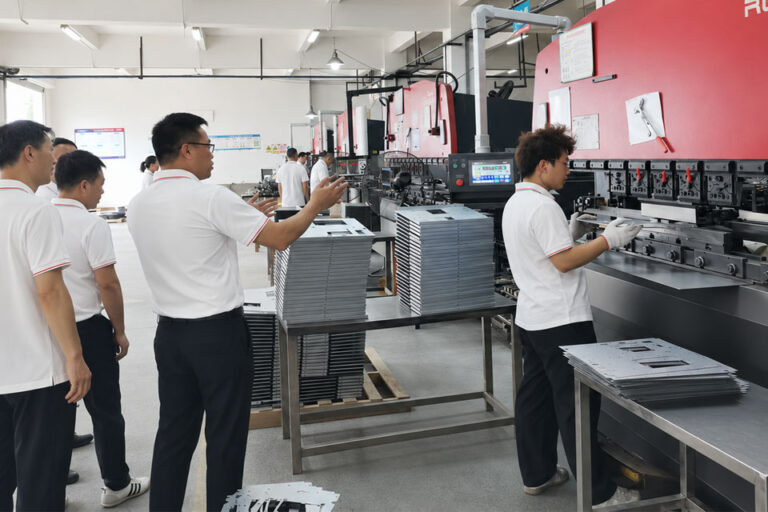
You want a team that can read prints, challenge risky details, protect revision control, communicate clearly, and keep batch quality consistent.
Look for:
- ISO 9001:2015 quality system
- Experience with small batch production
- Laser cutting, punching, forming, welding, hardware, and finishing support
- DFM feedback before production
- Clear tolerance standards
- First article inspection options
- Material traceability when needed
- Responsive quoting
- Realistic lead times
- Ability to support repeat releases
And one more thing: attitude.
If a supplier acts annoyed by low volume work, believe them.
Red Flags in Low Volume Sheet Metal Quotes
A low quote can be expensive.
Watch for these signs:
- No questions about finish or tolerance
- No mention of revision level
- Vague material description
- No inspection plan
- Unrealistically short lead time
- No discussion of hardware installation
- No DFM notes on a complex design
- Refusal to quote quantity breaks
- Poor communication before the order
The quoting stage is a preview of the production stage.
If communication is messy before money changes hands, it usually does not get cleaner later.
How to Make Your Parts Easier to Build
Here are a few practical moves that help almost every sheet metal project.
Use standard material thicknesses.
Keep bends consistent.
Avoid tiny flanges unless they are needed.
Give hardware room.
Mark cosmetic surfaces.
Use slots where assembly adjustment helps.
Do not over-tolerance non-functional dimensions.
Call out finish standards.
Send clean CAD.
Send the drawing too.
And when in doubt, ask the fabricator before the design is frozen.
Low Volume Does Not Mean Low Standards
This is the part we care about most.
Low volume parts still go into real products. Real customers touch them. Real technicians install them. Real field failures cost money.
So the process needs discipline.
Not bureaucracy.
Discipline.
That means revision control, inspection, clean communication, material control, documented finishing, smart packaging, and a supplier who understands that 50 bad parts can hurt just as much as 5,000 bad parts when they stop a launch.
When Custom Sheet Metal Parts Are the Better Buy
Off-the-shelf parts are great when they fit.
But when they almost fit, they can create strange compromises: extra brackets, awkward drilling, poor airflow, weak mounting, ugly gaps, or service issues.
That is when custom sheet metal parts make more sense.
Custom does not have to mean slow.
It means the part is built around your product instead of forcing your product to work around a catalog item.
Final Buyer Notes Before You Send the RFQ
Do not send a vague request and expect a precise quote.
Send the file package. Send the quantities. Send the finish. Send the inspection needs. Tell the supplier what the part does. Tell them where it failed before. Tell them what changed from the last revision.
A strong sheet metal partner will use that information.
A weak one will ignore it.
For ISO 9001:2015 low volume custom sheet metal parts, that difference shows up fast — in the quote, on the shop floor, and when the box lands at your door.