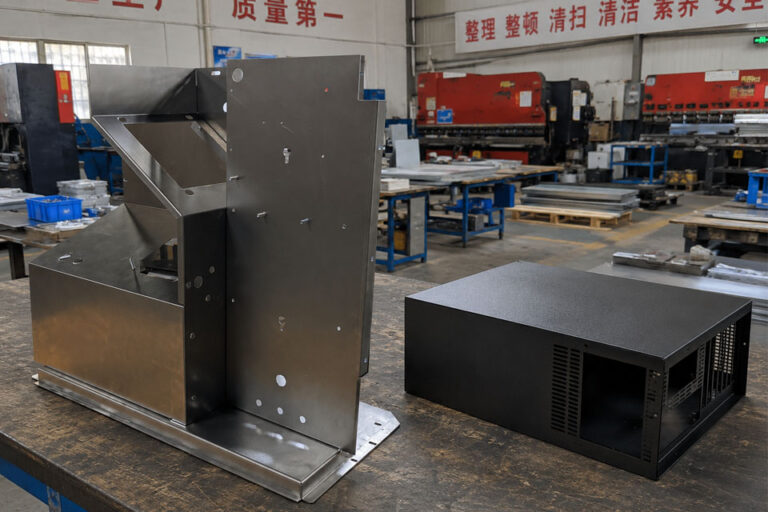




Sheet Metal Fabrication Finishing Options
Many surface troubles do not start in the coating cubicle.
They begin earlier– in the CAD documents, the product callout, the bend span, the weld series, the equipment option, or the line on the attracting that just claims “black coating” and anticipates every person to presume the remainder.
We see this constantly. A component obtains created, cut, curved, bonded, and only after that does somebody ask, “Should this be plated, powder covered, anodized, brushed, passivated, or left bare?”
That is late.
Far too late? Not constantly. But late enough to cost time, cash, and a few unpleasant emails.
Why sheet metal completing matters more than individuals think
A raw sheet metal part can look completed when it comes off the brake.
Tidy bends. Sharp edges. Nice laser-cut profile.
But raw metal is still raw metal.
It can oxidize, scratch, stain, perform electrical power where it need to not, fall short a salt-spray need, grab finger prints, or look inexpensive once it sits beside shaped plastic, glass, or a repainted real estate.
That is where surface comes in.
A surface can do one task– or several simultaneously:
- Protect against rust
- Enhance wear resistance
- Add shade or brand-matched look
- Boost cleanability
- Lower glare
- Include electric insulation
- Protect conductivity
- Prepare the surface area for sticky bonding
- Enhance customer-perceived top quality
- Aid parts survive delivery, installation, and field make use of
The marketplace is not little, either. Mordor Knowledge estimates the metal ending up market at USD 117.5 billion in 2026, with need linked to automotive, electronics, aerospace, renewable resource, and longer-life components. Mordor Intelligence metal ending up market report
So indeed, coating is aesthetic.
However it is likewise engineering.
The main sheet metal ending up choices
Right here is the useful shop-floor variation– not the book version.
| Complete Alternative | Best For | Usual Materials | Main Toughness | Watch-Out |
|---|---|---|---|---|
| Powder finish | Shade, longevity, outdoor components, enclosures | Steel, aluminum, galvanized steel | Difficult, consistent covering with lots of shades | Adds density; needs masking for strings and grounding factors |
| Plating | Light weight aluminum components requiring rust and put on resistance | Aluminum | Tough oxide layer adhered to light weight aluminum | Shade variant can take place between alloys and lots |
| Chromate conversion covering | Conductive corrosion security | Aluminum, zinc-coated parts | Extremely slim coating that protects conductivity | Lower abrasion resistance than powder coat or hard anodize |
| Zinc plating | Affordable rust resistance | Steel | Slim metal security | White rust or aesthetic variant if badly defined |
| Nickel plating | Wear, solderability, look | Steel, copper alloys, brass | Hard, intense, functional metal surface | Can include expense and vendor controls |
| Passivation | Stainless steel rust performance | Stainless-steel | Gets rid of cost-free iron and boosts rust resistance | Does not conceal scrapes or weld discoloration |
| Electropolishing | Cleanability, level of smoothness, stainless look | Stainless steel | Smooth, intense, sanitary surface | Product removal must be prepared |
| Cleaning/ graining | Decorative grain instructions | Stainless, light weight aluminum | Controlled visual surface | Instructions has to be called out on illustrations |
| Black oxide | Dark coating on steel | Steel | Reduced accumulation, dark appearance | Restricted deterioration resistance unless sealed |
| Wet painting | Shade on components that can not deal with treatment temperatures | Steel, light weight aluminum | Adaptable color and substratum alternatives | VOCs, drying time, and movie consistency need control |
No single finish wins every single time.
That is the trap.
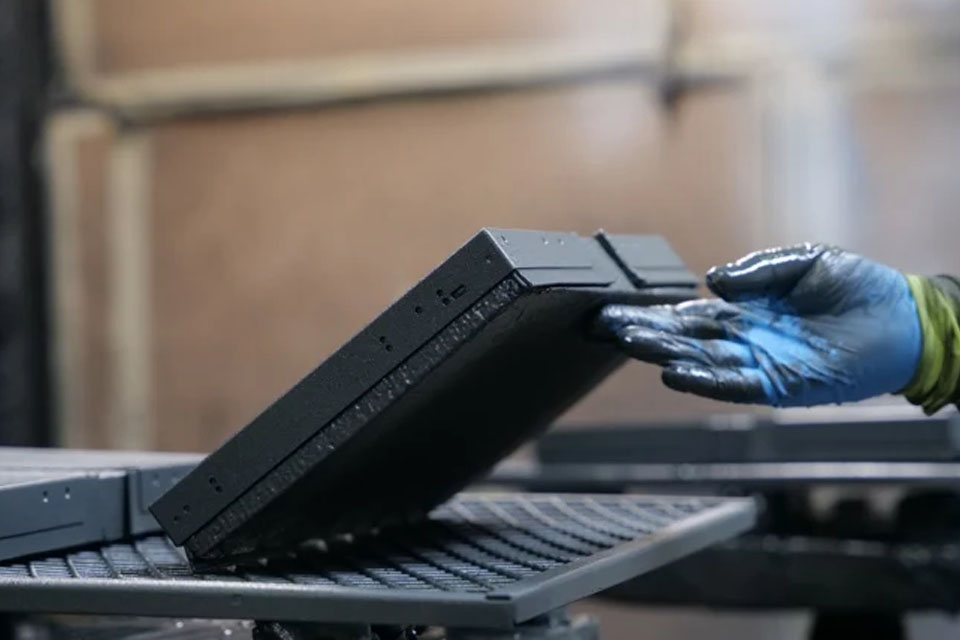
Powder covering sheet metal: challenging, vivid, and not constantly basic
Powder coating is usually the default surface for rooms, braces, panels, closets, covers, and equipment guards.
And completely reason.
It looks clean. It manages abuse. It gives you color alternatives. It is generally more consistent than wet spray paint on production sheet metal.
The international powder coatings market was approximated by Grand View Study at USD 11.5 billion in 2025 and forecasted to reach USD 18.5 billion by 2033, with a 6.2% CAGR from 2026 to 2033. Grand View Research powder coverings market report
The process is straightforward in concept:
- Clean and pretreat the part.
- Apply billed powder to the grounded steel.
- Cure it in an oven.
- Evaluate for coverage, shade, gloss, structure, and defects.
Yet the details matter.
A powder coat film is not zero-thickness. Regular density often lands around 2– 6 mils, depending upon powder kind, component geometry, operator setups, and specification. That build-up can matter around PEM hardware, joint attributes, ports, tabs, limited mating surfaces, and threaded openings.
And indeed, powder layer can be more eco beneficial than lots of solvent-heavy finish systems. EPA lists powder coverings among low- or no-VOC/HAP coating examples, which is one reason purchasers keep asking for it. EPA low/no VOC-HAP coatings support
Usage powder finish when
- The part needs a resilient color finish.
- The surface area will certainly be handled usually.
- The component rests outdoors or in a shop setting.
- You require structure to conceal light surface marks.
- The layout permits layer accumulation.
- Basing factors can be concealed.
- The part can endure cure temperature.
Think twice when
- Threads, ports, or mating faces are currently limited.
- You need electrical conductivity throughout the surface.
- The part has deep Faraday-cage locations where powder might not reach uniformly.
- You require an extremely thin coating.
- The assembly has heat-sensitive parts currently mounted.
An excellent powder-coated component starts with great manufacture. That is why finishing decisions should rest inside the broader sheet metal manufacture strategy– not after it.
Layering vs powder covering: the straightforward comparison
The short version?
Powder layer behaves more like a protective skin. Layering acts more like a metallic surface treatment.
That difference issues.
| Need | Better Fit | Why |
|---|---|---|
| Intense color or brand name shade | Powder covering | Large range of colors, gloss degrees, textures |
| Electrical conductivity | Layering or chromate conversion | Powder layer is generally shielding unless covered up |
| Slim finish | Plating or conversion layer | Lower accumulation than powder |
| Outside cosmetic room | Powder finishing | Solid appearance and weathering alternatives |
| Wear surface | Hard anodize, nickel, difficult chrome, or selected plating | Better for sliding/wear problems |
| Affordable steel deterioration security | Zinc plating or powder layer | Choice depends on appearance, direct exposure, and thickness limits |
| Light weight aluminum corrosion resistance | Anodizing or chromate | Bonds well to aluminum surface |
| Stainless corrosion performance | Passivation or electropolishing | Maintains stainless behavior without concealing the base metal |
| Masked grounding points | Powder covering with masks, or conductive coating | Depends on basing style |
| Tight-tolerance breeding surface areas | Slim plating, conversion coating, or masking | Powder build-up can interfere |
Powder layer is not “much better” than layering.
Plating is not “better” than powder layer.
They address various troubles.
Anodizing: ideal when light weight aluminum requires more than bare steel
Anodizing is not repaint.
It is an electrochemical procedure that expands an oxide layer on aluminum. That oxide layer enhances deterioration resistance and put on behavior, and it can be dyed for color.
Clear anodize prevails when the consumer still wants the part to appear like light weight aluminum. Black anodize prevails for electronics, instruments, brackets, and machined housings.
But anodize has personality.
Two light weight aluminum alloys might not come out the very same shade. Welded areas can reveal in a different way. A machined surface area and a sheet surface may not match. A combed component will certainly not look like a bead-blasted one.
And for sheet metal, the grain and surface condition before plating are not minor information.
Use anodizing when:
- The component is aluminum.
- You desire corrosion resistance without a thick painted movie.
- You need a cleaner metal look.
- You need far better wear resistance than bare light weight aluminum.
- You can tolerate some shade variation.
Do not assume anodize hides issues.
It generally does the contrary.
Chromate conversion coating: thin, conductive, and frequently misconstrued
Chromate conversion coating is utilized on aluminum when deterioration resistance and electric conductivity both issue.
Assume EMI protecting, basing, digital housings, aerospace-style hardware, or components that need a thin safety layer without a full paint film.
It is much thinner than powder finish.
That is the charm.
But it is not a magic shield. It does not offer the very same abrasion resistance as difficult anodizing or powder coat. It is also linked to chemistry and conformity options, so buyers often require to define the criterion, color, RoHS condition, and whether hexavalent or trivalent chemistry is needed.
For plated and chromate-related procedures, conformity is entitled to focus. OSHA recognizes electroplating as a metal finishing process where workers may be revealed to hexavalent chromium and mentions a Cr(VI) acceptable direct exposure restriction of 5 µg/ m ³ as an 8-hour time-weighted standard.
That does not mean “never make use of plating.”
It indicates specify it effectively.
Material-by-material coating guidance
Aluminum
Aluminum gives you several good alternatives:
- Clear anodize
- Black anodize
- Hard anodize
- Chromate conversion layer
- Powder finishing
- Brushing plus anodize
- Bead blast plus anodize
If the part is aesthetic, specify the noticeable faces. If the component requires grounding, call out concealed areas. If the part is curved, keep in mind that limited bends can change the way the surface looks across the distance.
This is where sheet metal flexing and ending up demand to be assessed together. A bend line, flange size, and inside distance can all influence just how a completed part looks and fits.
Light steel
Moderate steel is solid, economical, and simple to create.
It also rusts.
Typical surfaces consist of:
- Powder finishing
- Zinc plating
- Nickel plating
- Black oxide
- Damp paint
- E-coat
- Galvanizing, relying on part type and spec
For indoor braces, zinc plating might be enough. For a devices room, powder coating is typically a much better aesthetic and protective choice. For a moving or wear surface area, a specialized plating may be the smarter call.
Stainless-steel
Stainless is already deterioration immune, yet construction can injure that resistance.
Reducing, welding, grinding, and handling can leave complimentary iron or discoloration. That is why stainless components frequently require:
- Passivation
- Electropolishing
- Brushing
- Polishing
- Pickling, depending on weld condition and application
Powder covering stainless is possible. However ask why you are doing it.
If the objective is rust resistance, passivation might be cleaner. If the objective is shade or hiding welds, powder coat may make good sense.
Galvanized steel
Galvanized steel currently has zinc security.
But completing it can be challenging.
Powder finish over galvanized product calls for pretreatment control, and outgassing can cause flaws. If the component is very cosmetic, verify the finishing vendor is comfortable with the material and anticipated appearance.
Copper and brass
Copper and brass are typically chosen for conductivity, appearance, or both.
Possible finishes include:
- Tin plating
- Nickel plating
- Clear finishing
- Brushing
- Sprucing up
- Anti-tarnish therapies
Do not powder layer a conductive component unless you recognize which surfaces must stay conductive. Masking must be on the print.
Layout details that make or damage the surface
An excellent drawing does not simply say “powder coat black.”
That is not enough.
A far better drawing responds to the inquiries the finisher will certainly ask before the component come down on the shelf.
1. Which surfaces are cosmetic?
Call out Course An encounters or noticeable surface areas.
A hidden inside flange does not require the same inspection criterion as the front face of a control panel. Treating every surface like a showroom surface area burns cash.
2. Which surfaces must be concealed?
Mask:
- Threads
- Basing pads
- Bearing surfaces
- Press-fit areas
- PEM equipment locations
- Electric contact factors
- Limited mating features
- Information utilized after completing
Masking takes labor. Labor influences expense.
But remodeling coated strings is even worse.
3. Will coating density affect fit?
Powder covering can close up holes and slots. Layering can likewise affect fit, though usually less considerably.
If 2 layered components slide with each other, stack the coating density into the tolerance strategy.
Do the math prior to manufacturing.
4. Exist drain openings or catch areas?
Chemical completing procedures require water drainage.
Powder finishing requires line-of-sight access and good grounding. Deep edges, overlapped seams, and boxed geometry can catch chemicals, hold powder unevenly, or create aesthetic defects.
5. Will hardware be installed before or after ending up?
This one causes pain.
Mount PEM hardware before powder coating and you might need masking. Install it after ending up and you run the risk of damaging the layer.
For ended up enclosures and welded builds, intend the sheet metal assembly series early.
Complete choice by application
Electronic devices enclosures
Typically need:
- Cosmetic powder finishing
- Conductive concealed areas
- Chromate conversion under paint, in some cases
- Grounding pads
- Managed hardware installation
Watch grounding, EMI, heat, and label adhesion.
Industrial tools parts
Usually requirement:
- Powder finishing
- Zinc plating
- Stainless passivation
- Sturdy masking
- Texture to hide taking care of marks
Sturdiness issues more than excellent cosmetics in lots of shop-floor settings.
Brackets and internal supports
Generally demand:
- Zinc plating
- Black oxide
- Powder layer
- Bare stainless
- Passivation
Do not over-finish hidden parts unless rust, wear, or conductivity requires it.
Medical, food, and clean tools
Normally demand:
- Stainless-steel
- Passivation
- Electropolishing
- Smooth weld finishing
- Cleanable geometry
Prevent crevices. Avoid rough inner edges. Avoid surfaces that chip.
Consumer-facing steel parts
Normally need:
- Powder finishing
- Cleaned stainless
- Plated light weight aluminum
- Limited shade control
- Clear cosmetic criteria
For custom sheet metal components that buyers actually touch, appearance belongs to function.
Just how to specify finish on an illustration
A finish callout ought to remove guesswork.
Below is a helpful layout:
Complete type + color + gloss/texture + requirement + concealing notes + cosmetic course + sample requirement
Example:
Powder layer, RAL 9005 black, great appearance, 60– 80 gloss, mask all M4 strings and basing pads, Course An exterior faces, send first-article sample for approval.
Much better.
For anodize:
Clear anodize, Type II, Course 1, cosmetic faces as marked, shelf marks permitted just on hidden interior flange.
For passivation:
Passivate stainless-steel per relevant ASTM need, no noticeable totally free iron, tidy and completely dry pack.
For chromate:
Trivalent chromate conversion covering, RoHS-compliant, conductive finish required, mask threaded inserts if required.
Required a finish-heavy build? Place surface completing right into the RFQ from the start as opposed to treating it as a late add-on.
Expense and lead-time aspects most buyers miss
Finishing cost is not simply covering material.
It includes:
- Pretreatment
- Racking
- Masking
- Shade changeover
- Set minimums
- Heal time
- Assessment
- Rework risk
- Packaging security
- Supplier transmitting
- Qualification needs
- Aesthetic example approval
A basic flat brace with zinc plating is one point.
An aesthetic aluminum enclosure with black powder, concealed basing pads, press-in equipment, limited joints, and logo placement is an additional.
Same product family members. Really different finishing load.
FAQ
What is the best surface for sheet metal parts?
There is no universal ideal surface. For shade and influence resistance, powder finish is often the best selection. For conductivity or thin rust defense, plating or chromate conversion might be much better. For aluminum, anodizing is commonly the cleanest option. For stainless steel, passivation is typically the first coating to take into consideration.
Is powder finish much better than plating?
Powder layer is much better for colored, durable, cosmetic surface areas. Layering is much better for thin metal protection, conductivity, solderability, put on surface areas, and tight-tolerance features. The best choice depends upon the task the component has to do.
Can aluminum sheet metal be powder coated?
Yes. Light weight aluminum can be powder layered, yet pretreatment issues. If the part is cosmetic or outdoor-facing, specify the powder type, color, gloss, texture, covering up, and expected examination degree.
Does anodizing add density?
Yes, however plating behaves in different ways from paint. Component of the oxide layer turns into the aluminum and component expands outward. For tight-tolerance features, confirm the anodize type and anticipated accumulation.
Should threaded holes be ended up?
Generally, threaded openings ought to be covered up or chased after ending up, relying on the process and tolerance demand. Powder layer particularly can clog or tighten up threads.
What surface should I select for stainless-steel sheet metal?
For corrosion performance, passivation is often the very first pick. For a cleaner, brighter, smoother surface area, electropolishing might be made use of. For appearance, brushing or sprucing up may be enough. Powder finish is feasible, however it needs to have a clear purpose.
Prior to you send the RFQ
Send out the drawing, CAD documents, material, quantity, finish need, visible-face notes, concealing needs, and any example or accreditation needs.
And add one more thing: inform the vendor exactly how the component will certainly be utilized.
Indoor control panel? Outside telecom real estate? Conductive bracket? Clinical cart part? Device cover? Consumer-facing enclosure?
That context alters the surface referral quick.
A coating is not decor after construction.
It belongs to the component.