



How Does Welding Affect Flatness In Sheet Metal Assemblies
Welding flexes metal.
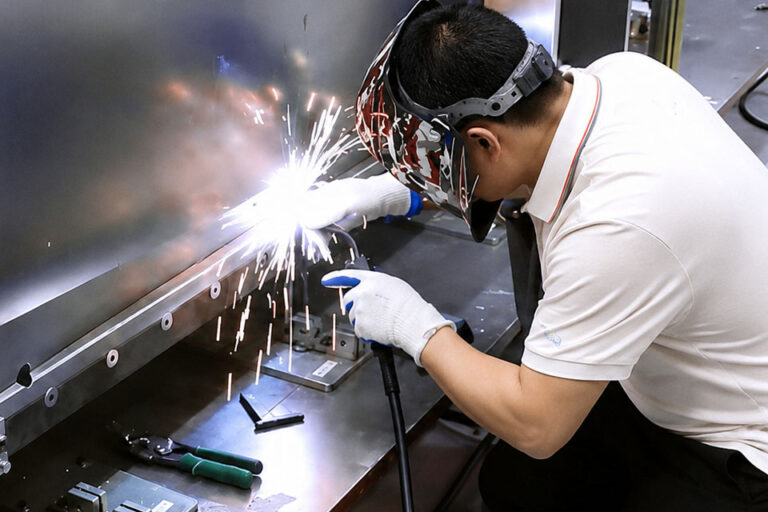
That sounds also basic, but in sheet steel assemblies, the weld bead is not simply a connection line; it is a local thermal shock zone where development, contraction, restraint, grain-level stress and anxiety, component stress, weld series, and material density all clash in a couple of secs.
So why do teams still deal with flatness as an examination problem as opposed to a process-design trouble?
The brief response: due to the fact that welding distortion conceals until the part appears of the fixture. The longer answer is uglier. Several shops price quote a level panel, reduced a flat space, create a flat-looking subassembly, clamp it hard, weld it hot, after that act shocked when the finished setting up rocks on a granite table. I have actually seen that mistake composed right into RFQs, drawings, and “tribal knowledge” job instructions. It is not a welder problem. It is a system problem.
Welding influences monotony in sheet steel assemblies by developing uneven thermal development during heating and irregular tightening throughout cooling. The weld zone shrinks as it solidifies, drawing neighboring sheet metal out of aircraft and creating angular distortion, bowing, twisting, or oil canning. In slim sheet, also little warm imbalance can surpass the rigidity of the panel.
That is the actual definition of welding distortion. It is not aesthetic. It is residual anxiety made visible.
According to TWI’s technical definition, welding joins materials by warmth, pressure, or both, creating the joint as the parts cool; that cooling down phase is where a lot of the dimensional damages begins.
Why Sheet Metal Welding Distortion Is So Aggressive
Slim material has no grace.
A 3 mm stainless panel does not act like a 25 mm plate. It has lower bending stiffness, reduced thermal mass, and less capability to soak up regional heat without moving. Once the weld pool kinds, the location near the weld broadens while the bordering sheet limits it. Then the weld cools down and diminishes. The surrounding sheet obtains dragged along for the experience.
This is why sheet metal welding distortion frequently appears as:
| Distortion Setting | What It Appears like | Normal Reason | Why It Matters |
|---|---|---|---|
| Angular distortion | One side lifts or turns | Uneven shrinking across weld thickness | Breaks mating-surface monotony |
| Longitudinal bowing | Setting up contours along weld line | Weld contraction parallel to seam | Causes fit-up concerns downstream |
| Transverse shrinkage | Size pulls internal throughout weld | Cooling down tightening throughout joint | Changes hole positioning and side area |
| Bending | Panel snaps into waves | Compressive residual anxiety in thin sheet | Often misdiagnosed as bad material |
| Oil canning | Panel stands out in/out under light stress | Thin unsupported sheet plus residual stress and anxiety | Looks cheap, really feels unstable, fails aesthetic requirements |
Right here’s the hard fact: monotony is generally shed before last inspection ever before sees the component.
A 2024 research on laser-welded 3 mm 304L stainless-steel plates found that larger welding gaps produced larger contortion, with the biggest Z-direction contortion getting to 4 mm when the void was 1.0 mm. That is not a rounding error. That is an unsuccessful assembly if your sheet steel monotony tolerance is tight.
Warmth Input, Weld Contraction, and the Misconception of “Just Clamp It Harder”
Clamps assistance. They additionally lie.
A fixture can hold a sheet metal assembly level while the weld is hot, however it can not remove shrinkage. As soon as the clamps launch, the part looks for a new anxiety balance. That is when sheet steel warping after welding programs up.
Weld shrinking in sheet metal is driven by numerous interacting variables:
Heat input
Greater amperage, slower travel speed, oversized welds, and excessive grain length all boost warmth input. Much more warm suggests a broader heat-affected zone, even more expansion, and extra tightening.
Weld size
Oversized welds are among the quietest earnings awesomes in construction. A 6 mm fillet where a 3 mm fillet would satisfy strength requirements is not “added safe.” It is additional warmth, added filler, additional cycle time, and extra distortion.
Joint restriction
Rigid restriction reduces movement throughout welding but increases locked-in residual stress. Light restraint allows movement very early yet may preserve reduced recurring anxiety after cooling down. Neither is instantly far better.
Material kind
Stainless steel, light weight aluminum, galvanized steel, and low-carbon steel all relocation in a different way. Austenitic stainless, as an example, has reasonably high thermal growth and low thermal conductivity compared to carbon steel, which makes distortion control extra demanding.
Weld sequence
Sequence is where excellent fabrication designers earn their maintain. Backstep welding, miss welding, balanced weld positioning, sew welding, and alternating sides can minimize thermal distortion welding effects. Random sequencing does the contrary.
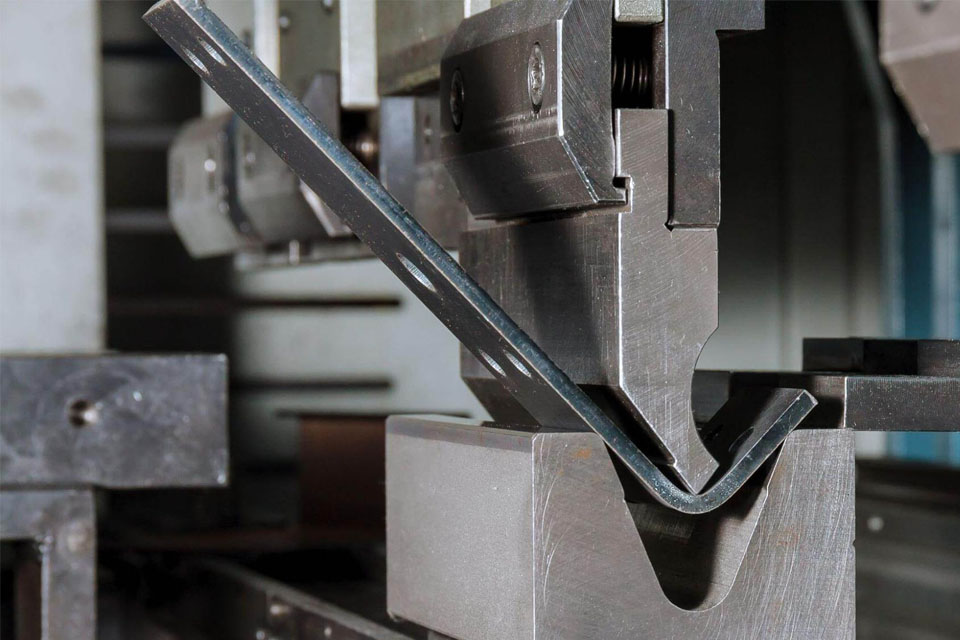
For settings up that integrate forming and welding, distortion preparation must start during sheet metal bending process style, not at the weld bench. Bend lines, alleviations, flange deepness, and material grain instructions all affect exactly how the bonded part will certainly release tension later.
The Monotony Resistance Trap: Illustrations Commonly Ask for What Welding Can not Deliver Cheaply
Flatness tolerances are not ethical declarations.
I have a solid viewpoint here: many illustrations over-specify monotony since nobody valued distortion control truthfully. A developer places 0.2 mm monotony across a bonded sheet steel panel, the buyer sends it to 3 suppliers, and the least expensive quote victories. Then every person snaps when the assembly requires rework, warmth straightening, press correction, or redesign.
The produced metal industry is not a tiny edge of the economic climate. Federal Book Economic Data, sourced from the U.S. Bureau of Economic Evaluation, reveals U.S. fabricated steel product manufacturing at $118.007 billion in genuine GDP for 2024, below $123.035 billion in 2023. In a field of that size, a few percentage factors of rework are not “store noise.” They are real money.
The United State Bureau of Labor Stats likewise reports a 2024 complete recordable injury and disease rate of 3.2 cases per 100 full-time workers for fabricated metal item manufacturing. Why point out security in a monotony short article? Due to the fact that distortion rework commonly implies added handling, grinding, correcting, refixturing, and hot job. Negative geometry multiplies exposure.
When you define sheet metal flatness resistance, you are indirectly defining:
| Tolerance Demand | Likely Production Reaction | Cost Threat |
|---|---|---|
| Loose cosmetic monotony | Standard welding and fundamental fixturing | Reduced |
| Modest useful monotony | Regulated sequence, tack strategy, assessment | Tool |
| Limited mating-surface monotony | Precision components, reduced warmth input, possible machining | High |
| Really limited post-weld flatness | Weld simulation, stress and anxiety alleviation, aligning, redesign | Really high |
| Aesthetic “no oil canning” requirement | Material/thickness redesign, ribs, grains, glue choices | Typically underestimated |
If the assembly must stay flat, the component might need ribs, offsets, formed beads, thicker scale, smaller welds, alternative weld placement, laser welding, resistance area welding, glue bonding, mechanical fastening, or post-weld flattening. That discussion belongs in DFM, not after the initial short article falls short.
For more comprehensive procedure planning, the appropriate starting point is not “how do we weld this?” It is sheet metal manufacture design with welding, forming, resistance stack-up, and inspection treated as one manufacturing system.
Oil Canning Sheet Steel: The Signs And Symptom No One Intends To Possess
Oil canning is not mysterious.
It is a noticeable instability in slim sheet steel where residual stress and anxiety, panel dimension, reduced stiffness, and surface geometry permit the panel to pop or ripple under light stress. The unsightly part is that oil canning might pass a basic dimensional check and still fail consumer acceptance because it looks unsteady.
In bonded sheet metal assemblies, oil canning usually comes from three conditions acting with each other:
- Slim sheet with wide in need of support periods
- Localized weld shrinking near or across the panel
- Inadequate rigidity from flanges, beads, ribs, or created geometry
The sector often condemns the driver. I do not buy it.
If the print requests for a big, slim, aesthetic panel with continual welds near the edge and no stiffening functions, the distortion is currently designed in. The welder can decrease damage, but they can not rescind physics.
A 2024 Shanghai Jiao Tong College research study on bonded Q355 steel plates measured welding recurring anxiety making use of X-ray diffraction and discovered maximum tensile recurring tension at 0.39 times yield toughness and maximum compressive residual anxiety at 0.14 times yield toughness. That is a suggestion that bonded plates bring internal stress and anxiety fields even when they look acceptable from the outside.
How to stop Welding Distortion in Sheet Steel Without Pretending It Is Easy
The very best distortion control method is not one trick. It is a pile of tiny decisions.
Design the weld out when possible
This is undesirable in weld-heavy shops, yet it holds true. If a tab, hem, rivet, secure, PEM insert, sticky, or created interlock can meet the load situation, it may defeat welding on monotony.
Decrease weld volume
Make use of the smallest weld that satisfies strength, tiredness, securing, and consumer demands. Oversized welds are distortion amplifiers.
Stabilize the warm
Alternating sides. Miss about. Use backstep welding. Prevent running long continual grains on slim in need of support sheet unless the layout really requires it.
Improve fit-up
Gap control is not documents. The 2024 laser-welded 304L stainless study revealing 4 mm Z-deformation at a 1.0 mm gap makes the factor directly: poor fit-up ends up being geometry loss.
Include tightness prior to welding
Flanges, ribs, grains, joggles, and return bends can make a thin panel much less prone to buckling. This is where custom-made sheet steel components must be engineered around post-weld behavior, not simply empty form.
Usage smarter components, not simply more powerful fixtures
An excellent fixture controls datum framework, warm access, tack series, and launch behavior. A negative component only conceals movement up until unclamping.
Evaluate early
Monotony needs to be checked after tack welding, after partial welding, and after release from the fixture. Waiting until last assessment is how scrap obtains expensive.
For intricate multi-component weldments, a professional sheet metal setting up solution should have the ability to talk about weld order, restriction strategy, scale choice, and expected distortion before pricing estimate manufacturing quantity.
What the Better Shops Know and the Cheap Shops Avoid Saying
The much better shops do not guarantee excellent flatness after welding. They specify risk.
They ask about mating surface areas. They ask whether flatness is aesthetic or useful. They ask whether the resistance applies free-state or restrained. They ask exactly how the client will certainly check it. They ask whether the part obtains powder layered, machined, put together, sealed, or loaded after welding.
The economical shops state, “Not a problem.”
That is the red flag.
A 2024 NIST Manufacturing Expansion Partnership study on Consolidated Equipment & & Welding explained production bottlenecks, inefficiencies, and communication voids as cost chauffeurs prior to enhancement job. That case was not especially concerning sheet flatness, but the functional lesson transfers cleanly: weld top quality issues are rarely isolated to the arc; they are typically process-control failings.
And that is precisely how thermal distortion welding need to be taken care of: as process control, not cleaning.
FAQs
Just how does welding impact sheet metal monotony?
Welding influences sheet metal monotony by concentrating heat in a narrow zone, causing neighborhood growth during welding and shrinking during air conditioning; that shrinkage draws bordering steel out of aircraft, developing bowing, angular distortion, distorting, or oil canning relying on thickness, restriction, weld size, and series.
The thinner the sheet, the more noticeable the motion. A heavy plate might absorb the thermal cycle with restricted noticeable contortion. A slim panel might relocate numerous millimeters from a little void, long bead, or bad tack pattern.
What triggers sheet metal bending after welding?
Sheet metal bending after welding is triggered by unequal thermal tightening, where the weld grain and heat-affected area shrink greater than the surrounding base metal; due to the fact that the sheet is restrained erratically by geometry, clamps, tacks, and surrounding functions, the assembly bends or buckles after cooling down.
The expression “after welding” matters. Lots of components look secure while clamped. The real geometry appears when the component opens up and locked-in stress and anxiety redistributes.
What is welding distortion?
Welding distortion is the long-term dimensional modification triggered by nonuniform home heating, development, air conditioning, and shrinkage during welding; in sheet steel settings up, it commonly appears as angular activity, bowing, transverse contraction, buckling, twist, or oil canning that avoids the component from meeting flatness demands.
In useful terms, it is warm background exchanged form error. The weld does not merely join the components. It revises the tension state of the setting up.
Exactly how can you protect against welding distortion in sheet steel?
You can prevent welding distortion in sheet steel by lowering heat input, minimizing weld dimension, controlling fit-up spaces, utilizing well balanced weld sequencing, adding rigidity through formed features, developing exact components, and checking monotony at intermediate stages instead of waiting until last assessment.
No solitary tactic solutions every assembly. The very best results originate from integrating DFM, weld treatment control, fixture design, and reasonable tolerance preparation before manufacturing starts.
Why does oil canning occur in welded sheet metal?
Oil canning occurs in welded sheet metal when residual anxiety and low panel stiffness produce an unstable surface area that pops, waves, or bends under light pressure; welding makes it even worse by including local shrinkage, specifically near wide unsupported spans or aesthetic panels with very little created reinforcement.
The solution is typically not a lot more grinding. It is better rigidity, much better weld placement, reduced heat input, and a lot more straightforward layout review.
Is laser welding much better for monotony than MIG or TIG welding?
Laser welding is typically much better for flatness because it can use reduced overall heat input, narrower weld areas, faster travel speeds, and smaller heat-affected locations; however, it still requires superb fit-up, regulated spaces, proper fixturing, and material-specific parameter advancement to stay clear of distortion.
Laser welding is not magic. If the joint gap is incorrect or the panel is poorly supported, flatness can still fail.
Final Ideas: Deal With Flatness Like a Layout Requirement, Not a Shop-Floor Apology
Right here is the actionable step: prior to welding any kind of flat sheet steel assembly, review the attracting for free-state monotony, weld dimension, in need of support panel period, fit-up void, evaluation approach, and cosmetic acceptance criteria.
After that ask one blunt question: does this design give the weld any kind of sensible chance of remaining level?
If the solution is no, fix the style, not the welder. Beginning with weld decrease, better sequencing, developed stiffeners, controlled voids, and a provider that can talk about distortion prior to manufacturing– not after the initial set fails inspection.